
Washington Window Tint Laws
Window tint is one of the most popular vehicle upgrades in Washington State — and for good reason. It blocks heat, filters UV rays, adds privacy, and gives your vehicle a sharper, more polished look. But tinting your windows without knowing the law can be an expensive mistake. A non-compliant tint can result in traffic fines, a failed vehicle inspection, or a mandatory removal order that costs you more than the original install.
Washington’s tint laws exist for a reason: law enforcement needs to see into vehicles during traffic stops, and visibility standards protect both drivers and pedestrians. In 2026, enforcement of these standards is as active as ever — and with more drivers adding tint post-purchase, officers are paying closer attention.
At Auto Trim Design, we’ve been installing compliant, professional-grade window tint for years. We know Washington’s laws inside and out, and every installation we complete is done to spec — no guesswork, no cutting corners.
Not sure if your current tint is legal? Schedule a consultation with Auto Trim Design before your next registration renewal or traffic stop.
Understanding Visible Light Transmission (VLT)
Before diving into the specific legal limits, it helps to understand the measurement that drives all window tint regulations: Visible Light Transmission, or VLT.
VLT is the percentage of visible light that passes through both your window film and your existing glass. A higher VLT percentage means a lighter, more transparent tint. A lower VLT percentage means a darker tint that allows less light through.
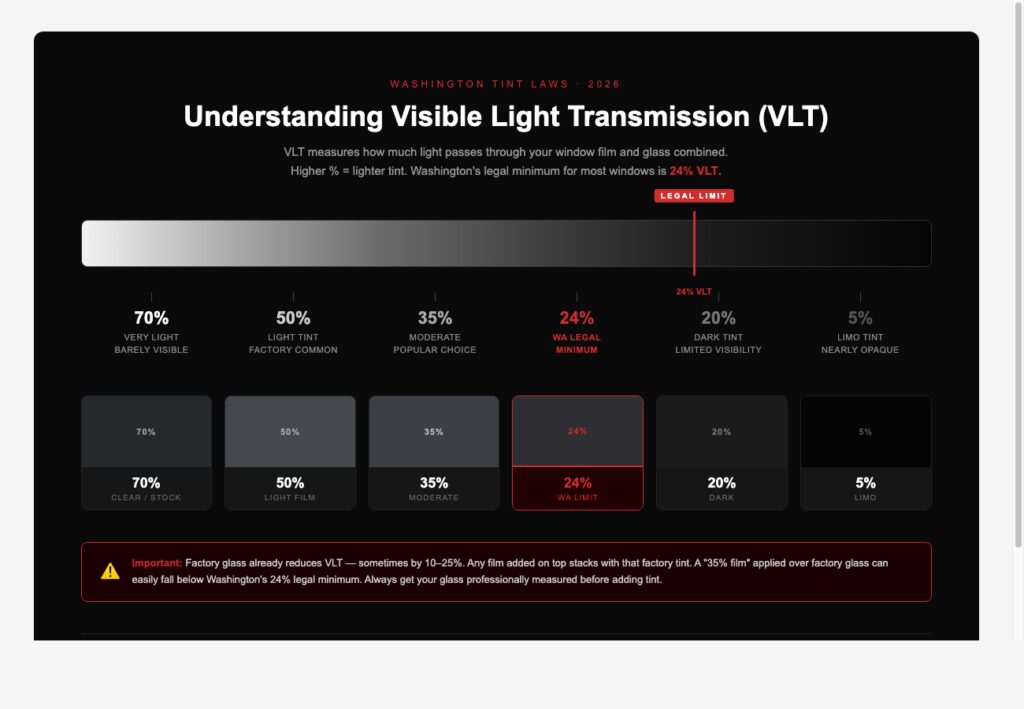
VLT Percentage | Appearance | Light Allowed Through |
70% | Very light, barely noticeable | Most light passes through |
50% | Light tint, common factory shade | About half the light blocked |
35% | Moderate tint, popular choice | Noticeable darkness from outside |
20% | Dark tint, limited visibility in | Significant light blocked |
5% (Limo tint) | Very dark, nearly opaque | Almost no light passes through |
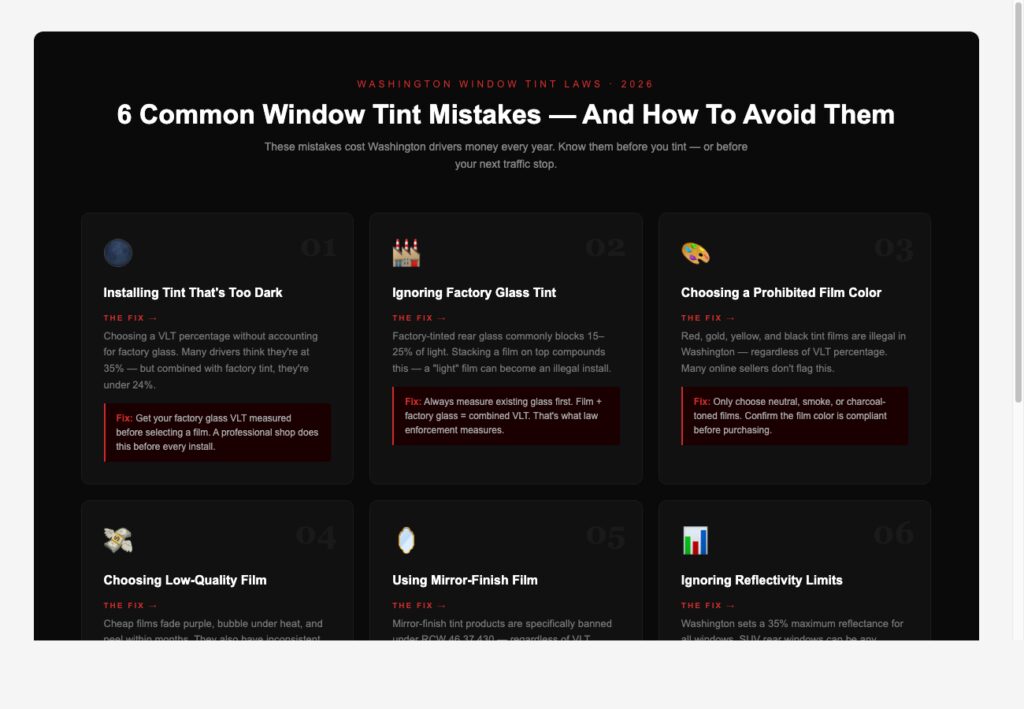
One common point of confusion: many vehicles come from the factory with lightly tinted glass, especially on rear windows. That factory tint already reduces VLT — and any film you add on top of it reduces VLT further. So even a “light” film applied over factory glass can push your total VLT below the legal threshold.
This is exactly why professional measurement matters. At Auto Trim Design, we use calibrated tools to measure your existing glass VLT before recommending or applying any film — ensuring your final result stays within Washington’s legal limits.
Legal Window Tint Limits In Washington (2026)
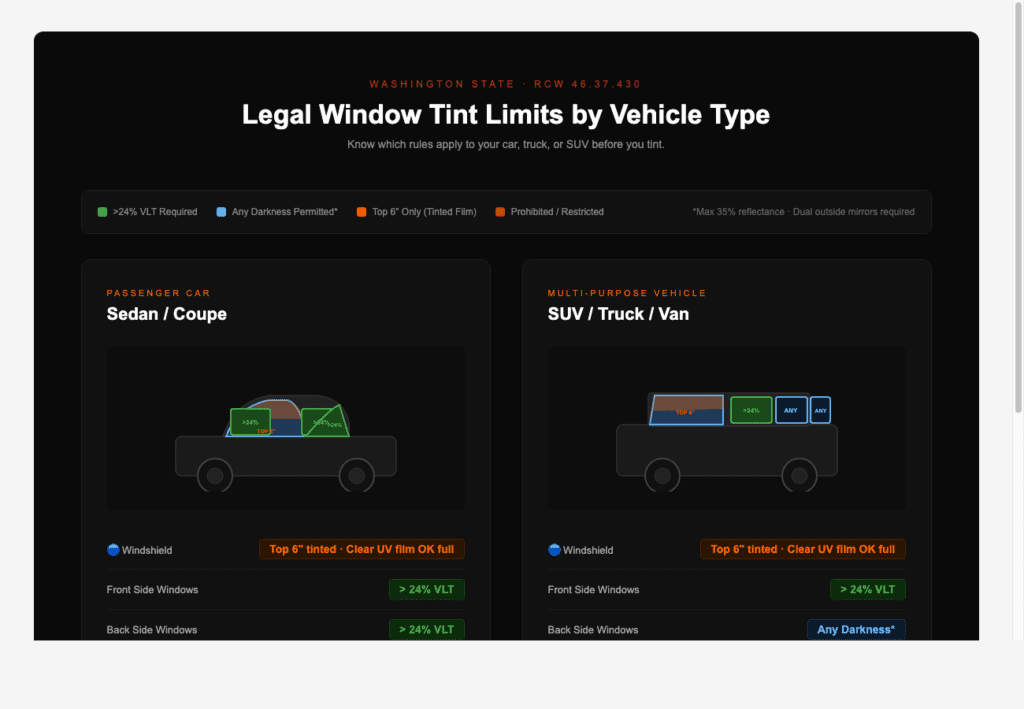
Washington State’s window tint laws apply to all vehicles registered and operated in the state, governed by RCW 46.37.430. The rules vary depending on your vehicle type, so it’s important to know which category your car, truck, SUV, or van falls into.
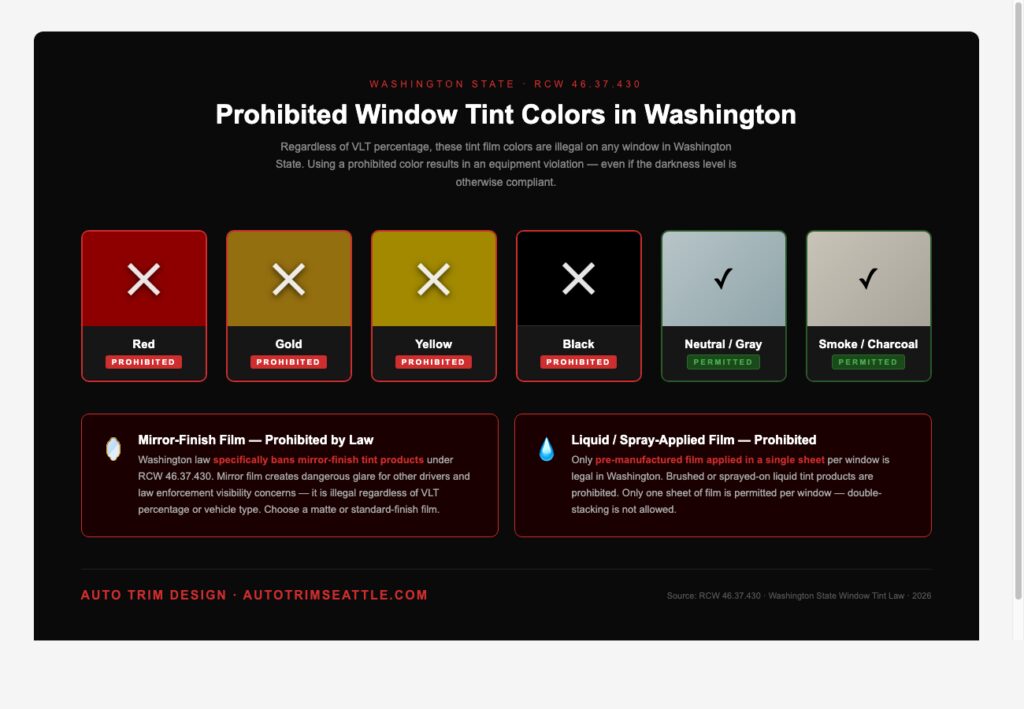
Important: Prohibited Tint Colors In Washington
Before reviewing window-by-window limits, note that Washington law prohibits tint film in the following colors on any window: red, gold, yellow, and black. Mirror-finish tint products are also specifically banned under RCW 46.37.430. Only a single sheet of film is permitted per window. Liquid pre-applied film — any product that is brushed or sprayed directly onto glass — is also prohibited.
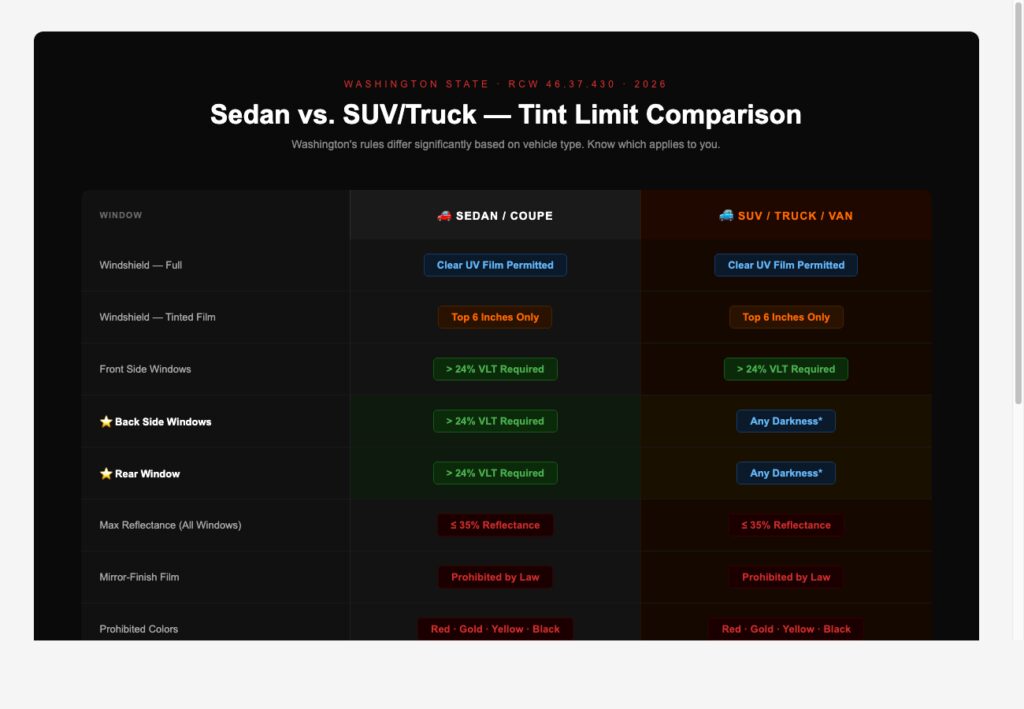
Passenger Vehicles (Sedans)
For standard passenger cars — sedans, coupes, and similar — Washington requires:
- Windshield: Clear UV-protective film is permitted across the full windshield. Tinted material may only be applied to the top 6 inches and must not extend into the AS-1 line area.
- Front side windows: Must allow more than 24% VLT.
- Back side windows: Must allow more than 24% VLT.
- Rear window: Must allow more than 24% VLT.
SUVs, Trucks, And Vans
Multi-purpose vehicles, trucks, motor homes, and vans are subject to different rear window rules under Washington’s special vehicle category:
- Windshield: Same as sedans — clear UV film permitted on the full windshield; tinted material on the top 6 inches only.
- Front side windows: Must allow more than 24% VLT.
- Back side windows: Any darkness is allowed, provided reflectance stays at or below 35% and outside rearview mirrors are present on both sides of the vehicle.
- Rear window: Any darkness is allowed, subject to the same 35% reflectance limit and dual outside mirror requirement.
Reflectivity Limits (All Vehicles)
Washington law sets a maximum reflectance of 35% for all windows on all vehicle types. Mirror-finish tint products are explicitly prohibited. Tint that creates a mirrored or highly reflective appearance — even if it falls below 35% reflectance — should be avoided, as enforcement officers have discretion in assessing reflectivity compliance. When in doubt, choose a matte or standard finish film.
Medical Exemptions And Special Cases
Washington State allows exceptions to standard VLT requirements for drivers with documented medical conditions that make sunlight exposure harmful or painful.
Who May Qualify
Common qualifying conditions include:
- Photosensitivity disorders (extreme sensitivity to light)
- Lupus and other autoimmune conditions that cause sun sensitivity
- Skin conditions such as xeroderma pigmentosum
- Certain eye conditions that require reduced light exposure
- Post-surgical sensitivity in some cases
How To Obtain A Medical Exemption
- Obtain a physician’s written statement documenting your condition and the medical necessity of darker window tint.
- Submit documentation to the Washington State Department of Licensing or relevant authority as part of your vehicle registration process.
- Keep documentation in your vehicle at all times. If you’re stopped, you’ll need to present this paperwork to the officer.
Medical exemptions do not grant unlimited tinting — your physician’s recommendation must support the level of tint applied, and the exemption is specific to you as the driver.
Why Staying Legal Matters More Than Ever
Enforcement of window tint laws in Washington hasn’t relaxed — if anything, it’s become more consistent. Here’s what’s at stake if your tint doesn’t meet state standards.
Fines And Traffic Stops
A non-compliant tint can result in an equipment violation citation. In Washington, those fines add up — and if you fail to correct the issue and show proof of correction, penalties can compound.
Mandatory Removal
In some cases, officers or judges can require that you remove non-compliant tint entirely. You’ll pay for removal on top of any fines, and then pay for a compliant reinstall — which means spending two or three times more than you would have if you’d done it right the first time.
Impact On Vehicle Sales And Trade-Ins
If you’re selling or trading in your vehicle, non-compliant tint is a liability. Buyers and dealerships increasingly check compliance before completing a transaction.
Fleet Operators
If you manage a fleet, non-compliant tint on any vehicle in your pool is a liability risk that scales with your fleet size. One citation can become many.
Benefits Of Professional Window Tint Installation
There’s a significant difference between a $60 DIY kit from an online retailer and a professional installation from a shop that knows what they’re doing.
Accurate VLT Compliance
A professional installer measures your existing glass VLT before applying any film. This ensures your final tint — glass plus film combined — falls within Washington’s legal range. DIY installers rarely account for factory glass, which is one of the most common reasons people end up with illegal tint unintentionally.
Clean, Long-Lasting Installation
Bubbles, peeling edges, and haze around corners are the hallmarks of a rushed or amateur install. Professional-grade film applied by a trained technician lies flat, cures properly, and lasts years longer than consumer-grade alternatives.
Warranty-Backed Films
The films used by professional shops like Auto Trim Design are backed by manufacturer warranties. Consumer kits typically aren’t.
Premium Film Options
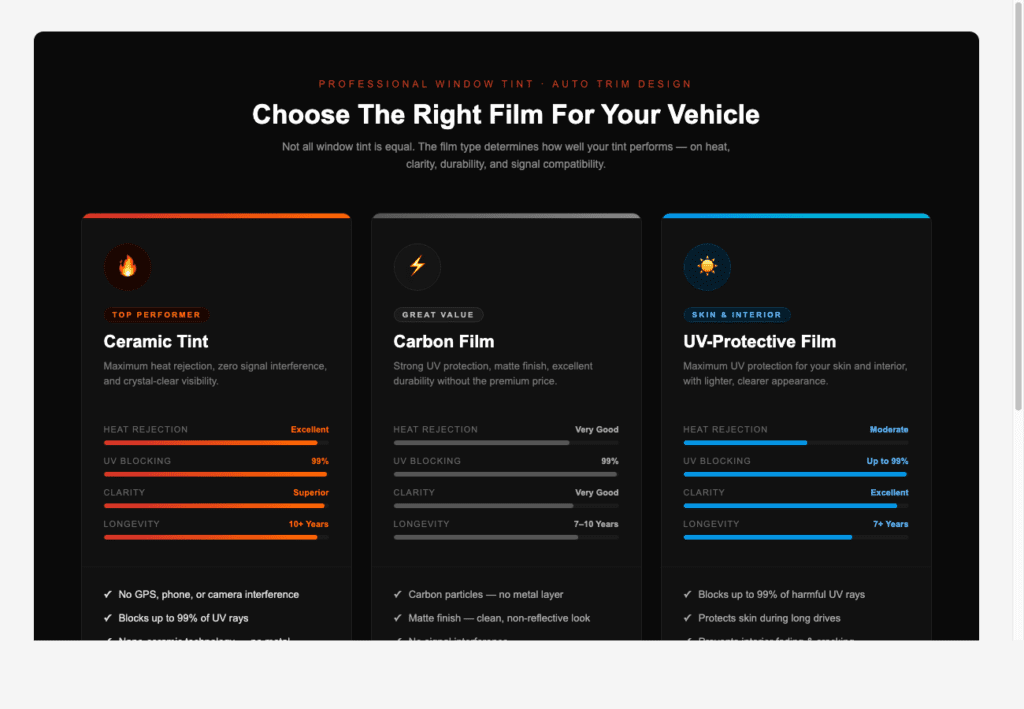
Not all tint is equal. Premium options available through Auto Trim Design include:
- Ceramic tint — Superior heat rejection, no signal interference, and exceptional clarity
- Carbon film — Strong UV blocking, matte finish, excellent durability
UV-protective films — Blocks up to 99% of UV rays to protect your skin and your interior
Common Window Tint Mistakes To Avoid
Whether you’re considering tint for the first time or wondering if your current tint is legal, here are the most common mistakes Washington drivers make — and how to avoid them.
Window Tint For Different Customer Types
Retail Customers
For everyday drivers in Seattle, Tacoma, Bellevue, and across Washington, window tint delivers comfort, protection, and appearance. Key benefits include heat reduction, UV protection, privacy, glare reduction, and improved resale value.
Dealership Partners
Dealerships that add window tint to lot vehicles before sale create an immediate visual upgrade that improves buyer perception and justifies stronger margins. Auto Trim Design partners with dealerships across the Seattle area to provide fast, compliant installations.
Fleet Operators
For fleet managers, window tint is a functional investment in driver comfort, interior protection, and consistent professional appearance across every vehicle in the pool.
How To Choose The Right Tint For Your Vehicle
Window Tint And Vehicle Resale Value
Quality window tint, professionally installed and legally compliant, is one of the few aftermarket upgrades that can genuinely improve your vehicle’s resale appeal — not just its look. UV-blocking film prevents the fading, cracking, and discoloration that reduces perceived interior condition at resale. A clean professional tint also signals buyer care and attention to detail.
Frequently Asked Questions About Washington Tint Laws
How dark can my tint be in Washington?
For passenger vehicles, all windows must allow more than 24% VLT. For SUVs and trucks, front side windows must exceed 24% VLT; rear and back side windows can be any darkness as long as reflectance stays at or below 35% and outside mirrors are present on both sides.
Can I tint my windshield in Washington?
Clear UV-protective film is permitted across the full windshield. Tinted material may only be applied to the top 6 inches and must not extend into the AS-1 line area.
Are there tint colors that are illegal in Washington?
Yes. Washington law prohibits red, gold, yellow, and black tint film on any window. Mirror-finish products are also banned.
Do I need to carry proof of legal tint?
Not for standard tint within legal limits. However, drivers with a medical exemption must carry physician documentation in the vehicle at all times.
What happens if I get a tint ticket in Washington?
You’ll receive an equipment violation citation, be required to remove or replace the non-compliant tint, pay the fine, and provide proof of correction.
Does factory tint count toward my VLT limit?
Yes. Factory-tinted glass already reduces VLT — any film added on top must stay within what’s remaining to be legal.
What is the reflectance limit for window tint in Washington?
Washington sets a maximum reflectance of 35% for all windows on all vehicle types.
Is ceramic tint worth the extra cost?
For most drivers, yes. Ceramic tint outperforms standard films on heat rejection, UV blocking, longevity, and it doesn’t interfere with GPS, phone signals, or vehicle camera systems.
Conclusion: Stay Legal, Stay Protected
Window tint is a smart investment for Washington drivers — when it’s done right. Washington’s 2026 tint laws are clear: the 24% VLT minimum, the 35% reflectance cap, the prohibited colors, and the restrictions on mirror-finish film all exist to keep roads safe.
At Auto Trim Design, we install tint correctly, measure it precisely, and stand behind every job we do. Whether you’re a daily commuter, a dealership partner, or a fleet manager, we have the expertise and film options to get you exactly where you need to be — legally, visually, and for the long haul.
Ready to upgrade your windows the right way? Schedule your window tint consultation with Auto Trim Design today.
Explore all our services | Contact us here
For vehicle safety standards and tint guidelines, visit NHTSA.gov. For industry standards and restyling resources, visit SEMA.org. For vehicle valuation, visit Edmunds.com.